Rethinking Homework at St. James Lutheran School
Supporting Learning, Balance, and Family Time
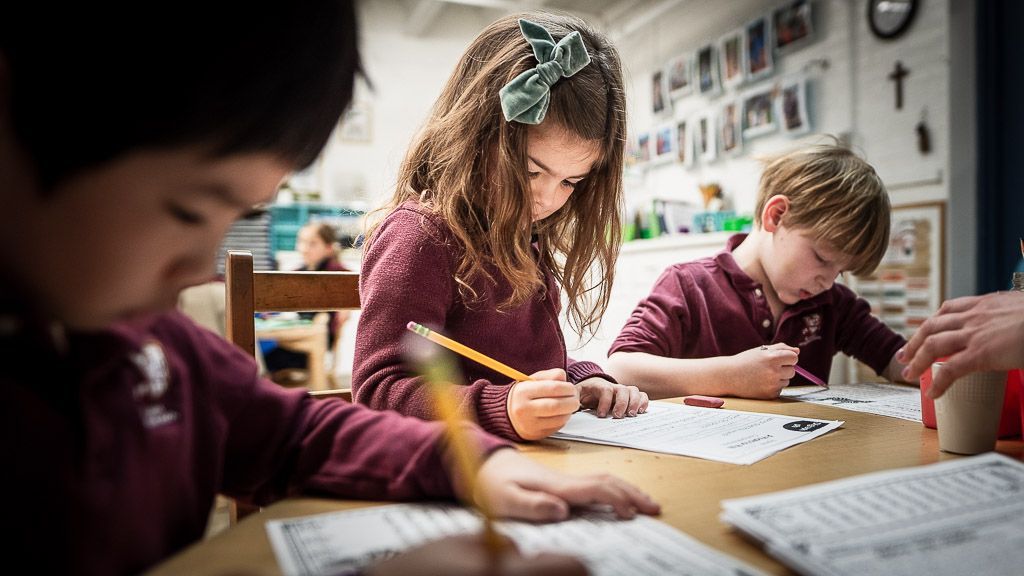
At St. James, we see homework as a tool—not a taskmaster. It’s designed to strengthen learning, foster independence, and leave room for family, play, and rest. With new teachers joining our community this year, we took the opportunity to revisit our homework philosophy, making sure it aligns with our values, supports student growth, and reflects current research on effective learning.
Our Homework Philosophy
Homework at St. James serves a clear purpose: to help students practice skills, build routines, and connect home and school—without overwhelming them. Here’s what we aim to accomplish:
1. Establish Healthy Routines
Homework helps children learn to plan and manage time. For example, students in aftercare enjoy a snack first, then spend time completing homework before playing. This ensures homework becomes a structured part of the day and frees up family time at home.
2. Connect School and Home
Especially for younger students, homework provides insight into classroom learning. Parents can see what their children are learning and celebrate their progress together.
3. Finish Classwork When Needed
Sometimes students need extra time to complete classroom assignments. While we encourage engagement during school hours, finishing work at home can offer a quiet space for focus, without cutting into family or playtime.
4. Practice Skills and Build Study Habits
Homework reinforces math, vocabulary, and reading skills. Older students also learn how to study effectively, using study guides and planning for tests—essential executive functioning skills that will serve them for life.
5. Develop Creativity and Executive Function Through Projects
Project-based homework allows students to manage their time, make decisions, and create independently. Parents are encouraged to support rather than lead, giving children the opportunity to develop confidence, organization, and imagination.
Homework Expectations by Grade
Kindergarten: Optional homework focuses on playful routines through short reading and math activities that parents can do with their child.
Grades 1–4: Short weekly assignments in math, spelling, and reading help students reinforce classroom learning while keeping evenings manageable.
Grade 5: Students complete regular math and reading practice, with occasional study or enrichment activities to begin preparing for longer-term projects.
Middle School: Homework varies by subject and generally takes no more than an hour each night. Students focus on time management, completing projects, and test preparation.
“My homework feels balanced. I quickly finish it in class or right after school so I can spend time with my family or friends. I always have time for my afternoon sports and activities. It's not just the teacher throwing work at us, but trying to make sure we know what to do in class. I don't feel overwhelmed at all. I can spend time with family, and I know what to do in class.’
- St. James Middle School Student
What Research Tells Us
Research on homework provides clear guidance: it works best when purposeful, age-appropriate, and balanced with rest and play.
Supportive Findings:
- Math homework can boost grades and test performance in elementary and middle school.
- Parental involvement helps families stay connected to classroom learning.
- Homework fosters responsibility, independence, and study skills.
- The “Ten-Minute Rule”—ten minutes per grade level—is the most effective guideline.
- Homework supports background knowledge, improving reading comprehension.
Points of Caution:
- More homework doesn’t always mean better learning.
- Excessive homework can reduce family time, unstructured play, and rest.
- Parental help doesn’t guarantee higher achievement.
- Too much homework can increase screen time and stress parent-child relationships.
Working Together for Student Success
Homework at St. James is a partnership between students, families, and teachers. We design assignments to support learning, not control evenings, and encourage routines that strengthen independence and curiosity. Our goal is to help students become confident, balanced, and lifelong learners—kids who love to read, ask questions, and still have time to be kids.
“Homework has always been the vehicle through which our daughter and I touch base about what is going on at school. As a seventh-grader, she knows how to stay on track with her tasks and the steps to finish her work. Looking back over our years at the school, I can see how homework has developed steadily with each grade to increase her independence and mastery over her own workload. Helping our daughter with homework has communicated how important we believe her schoolwork is, and engaging with her—even if it is just helping her organize—lets her know we take her role as a student seriously.”
- St. James Parent